What is a Horizontal Lifeline and Why Is It Needed?
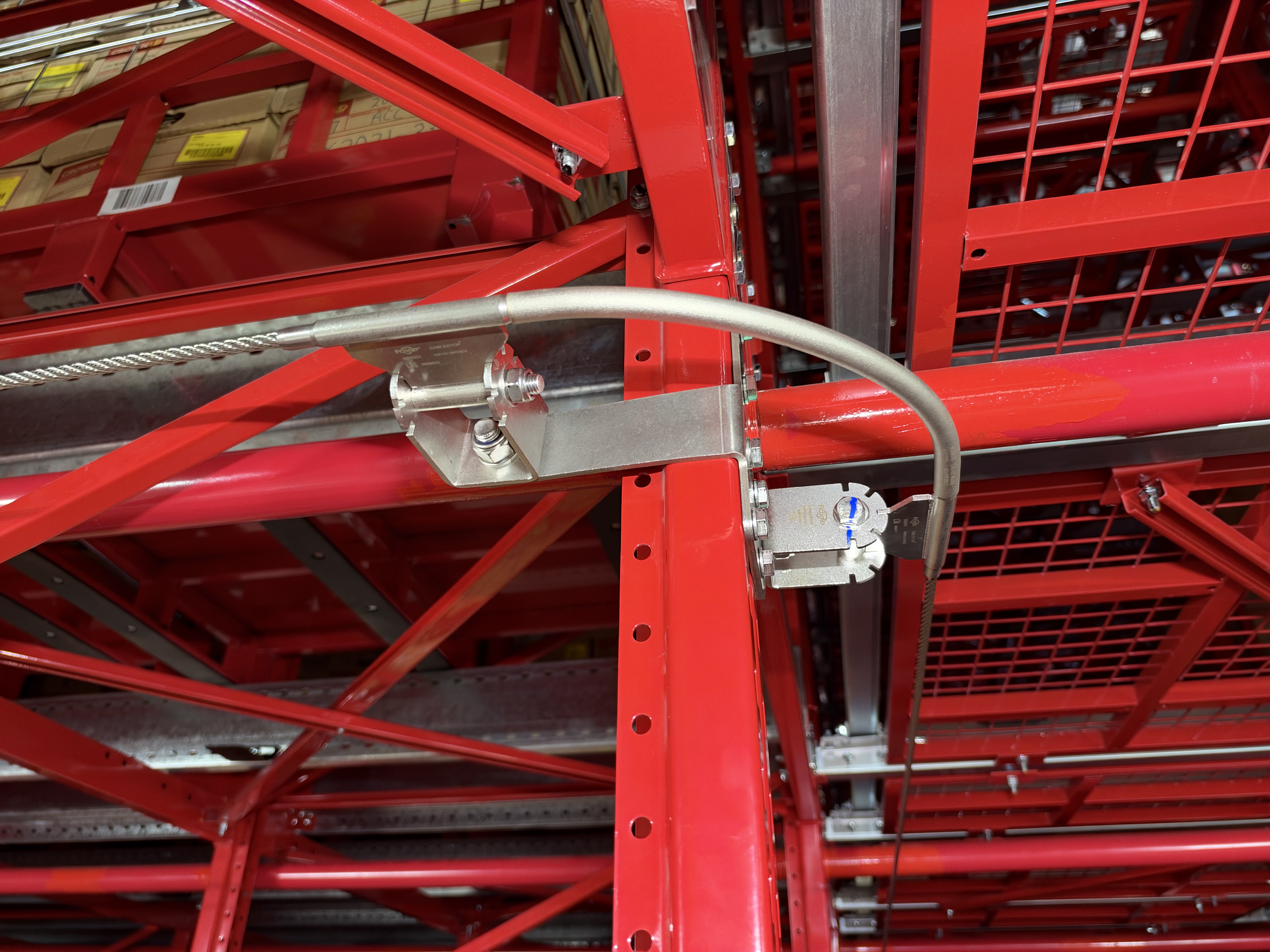
Core Components and Design Principles
Component | Function | Core Requirements |
Anchorage Points | System foundation, withstands all fall impact | Individual anchorage points must withstand minimum 10 kN (≈1000 kg), calculated by qualified design personnel |
Steel Wire Rope | Flexible connection element spanning between points | Stainless steel (corrosion-resistant) or galvanized steel, diameter 6–10 mm |
Energy Absorber | Buffers fall impact and reduces peak load | Must be matched to system, not interchangeable |
Intermediate Support | Reduces rope sag during long spans | Same strength requirements as end anchorage points |
Connectors and Safety Harness | Interface between worker and system | Must be certified compatible, included in free fall distance assessment |
Anchorage point strength underestimated—selection based on experience rather than engineering calculation, resulting in overload risk
Free fall distance miscalculated—rope sag not considered, workers may collide with underlying structures
Multi-person use risk overlooked—each additional person alters the system's dynamic characteristics
Permanent vs. Temporary Systems: Selection Guide
Comparison Dimension | Permanent/Semi-Permanent System | Temporary System |
Installation | Requires engineering design, installed by professional teams | Rapid installation, no specialized tools required |
Materials | Premium stainless steel (AISI 316), corrosion-resistant | Lightweight synthetic rope or portable steel wire kit |
Service Life | 5–10+ years with high frequency use | Project duration, short-term flexible application |
Cost | High initial investment, stable maintenance costs | Low initial cost, but accumulates across multiple projects |
Applicable Scenarios | Roof maintenance, long-term industrial facility protection | Construction sites, equipment rotation projects |
Free Fall Distance: The Most Error-Prone Element
Compliance Standards Overview
European Standard EN 795 Class C: International standard for flexible horizontal lifeline systems, requires CE certification
National Standard GB 6095 Series: Domestic standards for fall protection equipment including safety ropes and harnesses
National Standard GB/T 35547: Standards for accessories including speed-differential self-locking devices
Inspection and Maintenance: Cannot Be Overlooked
Inspection Category | Content and Frequency |
Pre-Use Inspection | Steel wire rope free of kinks/broken strands/wear; anchorage points free of looseness/rust; rope tension complies with specifications (before each use) |
Post-Impact Inspection | Immediately cease use after any fall event; qualified personnel must evaluate before reuse |
Periodic Inspection | Per manufacturer requirements (typically 6–12 months), professional institutions conduct comprehensive assessment and maintain records |
Multi-Person Simultaneous Use Risk
Anchorage point load multiplies, potentially exceeding design capacity
Rope deflection and free fall distance must be recalculated
One person's fall may trigger a chain reaction, causing multiple people to lose balance